
Should You Change Your Resume for Every Job?

Primary topic: should you change your resume for every job
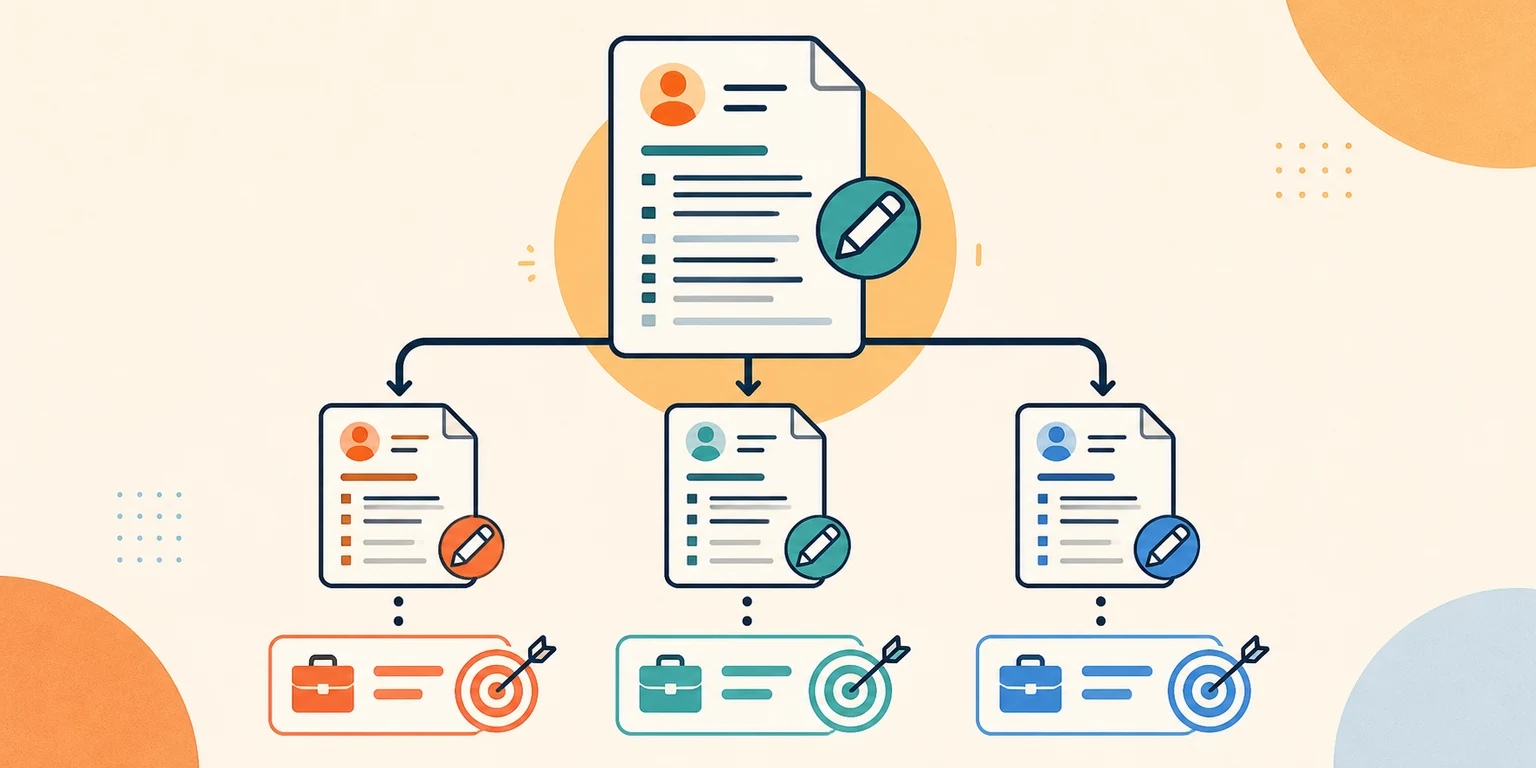
Yes, you should adjust your resume for each serious application—but that does not mean rebuilding it from a blank page. Change the parts that determine relevance: the summary, skills order, selected bullets, and terminology used for experience you genuinely have.
Always change these areas
- Align the headline or summary with the role family.
- Move the most relevant skills forward.
- Prioritise experience bullets that prove the main requirements.
- Replace internal jargon with accurate market terminology.
- Remove details that distract from the target role.
Do not change these facts
Never alter employers, dates, qualifications, job titles, or results. Do not add tools or responsibilities you cannot explain in an interview.
Use a master resume
Maintain one detailed source document containing your verified achievements. For each application, duplicate it and select the strongest relevant material. This creates consistency without forcing you to remember every accomplishment again.
For roles that differ only slightly, a ten-minute relevance pass may be enough. For a career change or unusually valuable opportunity, invest in a deeper rewrite. Follow our step-by-step tailoring guide and compare the before-and-after example.
Frequently asked questions
How long should resume tailoring take?
With a strong master resume, most well-matched roles need prioritisation and editing rather than a complete rewrite.